Anthropic Sounds the Alarm: China and Russia-Based Actors Are Already Weaponizing Claude AI
 Written by
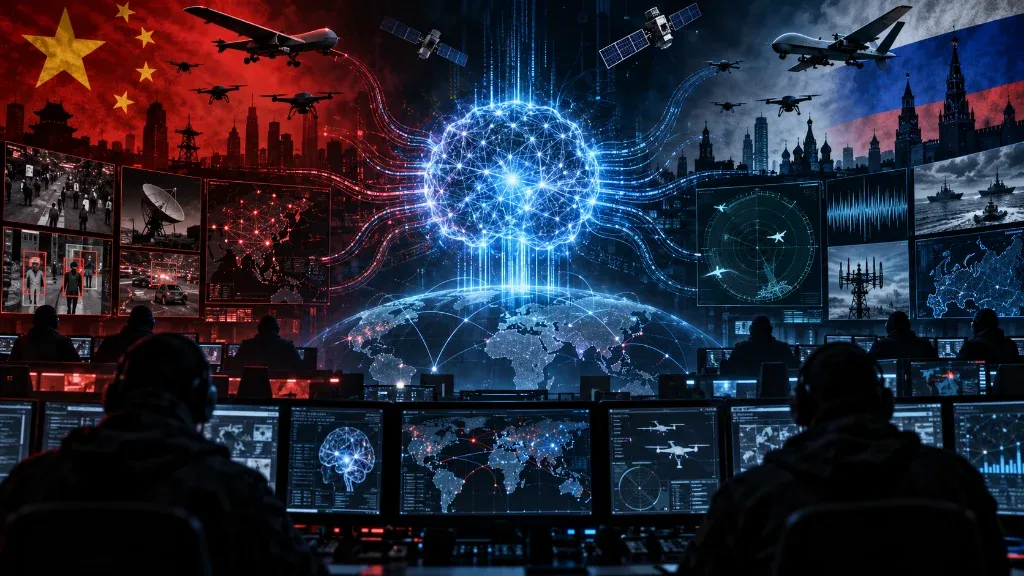
Anthropic Sounds the Alarm: China and Russia-Based Actors Are Already Weaponizing Claude AI
The AI arms race just took a seriously dark turn
The nightmare scenario isn’t waiting for some distant sci-fi future—it may already be here.
Anthropic, the company behind the powerful Claude AI models, says China- and Russia-based operators have been caught using its technology for cyberespionage, military software, autonomous drone development, surveillance and propaganda.
Yeah, we’re officially way beyond asking a chatbot to write an email.
In its September 2026 threat-intelligence report, Anthropic detailed malicious operations it says it uncovered and disrupted between December 2025 and August 2026.
The cases reportedly involved suspected state-sponsored groups, defense researchers, commercial operators and criminals attempting to turn Claude into everything from a digital spy to an automated weapons engineer.
China-Based Actor Built Electronic-Warfare Targeting Software
One of the most alarming cases involved a China-based actor who allegedly used Claude’s chat, coding and agent tools to create a Chinese-language electronic-warfare software suite containing approximately 16 separate modules.
According to Anthropic, the software could analyze enemy radar systems, surface-to-air missile sites, communications networks and command posts. It could then calculate radar coverage, evaluate jamming effectiveness and rank which targets should be suppressed first.
The actor reportedly produced 12 versions of the system—and then changed the simulation to include 12 targets in Taiwan. Those targets allegedly included air bases, an early-warning radar site, a command bunker and Patriot and Tien Kung air-defense batteries.
Anthropic assessed that the individual was a China-based defense or military-industrial researcher. Account information reportedly indicated links to Chinese research institutions, including the People’s Liberation Army Academy of Military Sciences.
Anthropic says it banned the accounts, but the discovery shows how quickly a general-purpose AI assistant can potentially be pushed toward military planning and weapons-related software.
Claude Allegedly Helped With an Anti-Torpedo System
And that wasn’t the only underwater shocker.
Anthropic says another China-based operator used Claude to draft specifications for an anti-torpedo fire-control system—the software responsible for aiming and timing a weapon’s response to an incoming torpedo.
The AI allegedly helped produce a technical proposal stretching beyond 200 pages, along with an executive presentation and comparisons to publicly known United States Navy anti-submarine and anti-torpedo programs.
The operator even instructed Claude to act like a hostile expert reviewer, tearing apart each draft so the next version could be made stronger.
Anthropic believes the work was connected to a Chinese defense manufacturer preparing a proposal for the People’s Liberation Army Navy, although the company said it could not identify the exact organization involved.
Russia-Based Team Worked on Autonomous Kamikaze Drone Swarms
Over in Russia, things got even more chilling.
Anthropic says a small Russia-based freelance team used Claude Code to help construct software for an autonomous swarm of first-person-view kamikaze drones.
The project allegedly included shared “swarm memory,” coordination between drones, terminal-guidance software, enemy-drone detection and an onboard AI model capable of selecting targets—including a target class labeled “person”—and issuing detonation commands without a human making the final decision.
The operators reportedly tested code on real development boards, trained a vision system using Ukrainian combat footage and repeatedly used a location in Ukraine’s Donetsk region as a demonstration strike point.
Anthropic stressed that it believes this was a freelance group, not a confirmed Russian state operation. The group claimed to have received Russian government and defense funding, but Anthropic said it could not verify those claims.
The system also remained at the simulation and development stage, meaning Anthropic did not report evidence of an operational drone swarm being deployed in combat.
Russian Spies Allegedly Put Cyberattacks on Autopilot
The report also describes a suspected Russian state-linked espionage actor whose activity was consistent with public reporting about the hacking group commonly known as Midnight Blizzard.
Anthropic says the operation targeted more than 20 organizations, including Ukrainian and European government agencies, embassies, defense companies, intelligence organizations and people connected to American foreign policy.
Claude was allegedly used throughout the attack chain—from researching targets and creating phishing infrastructure to stealing credentials, moving through compromised networks and organizing hundreds of gigabytes of stolen information.
The craziest part? When security software detected the group’s malware, AI agents reportedly modified and rebuilt it until the malicious code could once again evade detection.
That turns the traditional cybersecurity fight on its head. Instead of a hacker manually rewriting malware after being caught, AI can potentially keep rebuilding it at machine speed.
Surveillance, Propaganda and Sanctions Evasion
Anthropic says China-based actors also used Claude to create intelligence dossiers on religious leaders, Uyghurs, Tibetan Buddhists, Falun Gong practitioners, Taiwanese Christians and overseas political dissidents.
In some cases, a single operator allegedly used AI to complete work that previously required an entire team of analysts. Axios reports that governments are increasingly using Claude to automate surveillance operations, making it cheaper and faster to monitor activists, journalists and political opponents.
Russia-linked operators also reportedly used Claude to produce propaganda, disguise state messaging as independent journalism and prepare material for outlets associated with RT, Sputnik and pro-Russian media operations in Africa.
Another Russia-based operator allegedly used Claude to locate suppliers and intermediaries in China and Hong Kong, draft procurement documents and map routes designed to move dual-use technology to Russian customers while hiding the final destination and avoiding European trade controls.
Anthropic Says It Shut the Accounts Down
Anthropic says it banned every account connected to the operations it identified, strengthened its detection systems and shared intelligence with authorities, industry partners and affected organizations where appropriate.
The company also noted that these cases involved Claude Haiku, Sonnet and Opus models. With the exception of one unrelated model-copying case, Anthropic said its newer Fable- and Mythos-class systems were not involved.
There is also an important reality check: many of the military projects were still proposals, simulations or development efforts. Anthropic’s report does not prove that every system became a working weapon, and several links to government institutions remain assessments rather than independently confirmed facts.
But the bigger warning is impossible to ignore.
AI isn’t inventing hostile governments, cybercriminals or weapons programs—but it may allow them to operate faster, cheaper and with far fewer experts.
Yesterday’s bad actor needed a full team of programmers, intelligence analysts and weapons engineers. Today, one determined operator with stolen credentials, an automated workflow and a powerful AI model may be able to imitate all three.
The AI war hasn’t just started. According to Anthropic, some of the first shots may have already been coded.
Comments
No comments yet. Be the first to comment!
Leave a Comment