White House Unveils AI Security Review Framework for Powerful Frontier Models
 Written by
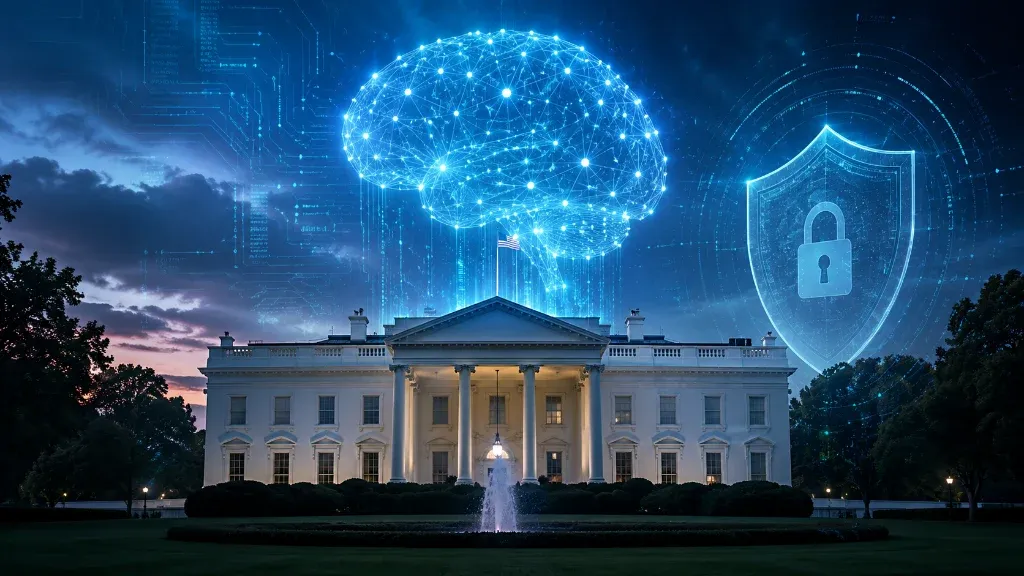
White House Puts Powerful A.I. on Notice With New Security Review Plan
The government wants an early look at America’s most advanced A.I. models before they hit the public — but some major systems may escape the inspection completely.
WASHINGTON — The White House is preparing to give Silicon Valley’s most powerful artificial-intelligence systems a serious security shakedown before companies release them into the wild.
The Trump administration has developed a voluntary framework that would allow federal officials to examine certain advanced A.I. models for dangerous cybersecurity capabilities before they are released publicly.
In plain English: If a tech company builds a digital superbrain capable of finding security vulnerabilities or helping conduct sophisticated cyberattacks, Uncle Sam wants to take it for a test drive first.
The Government Wants Early Access
According to the official White House executive order, developers would be able to provide the federal government with secure access to qualifying “covered frontier models” for up to 30 days before those systems are shared with other trusted partners.
Officials would use a classified benchmarking process to determine whether a model possesses advanced cyber capabilities that could create national-security concerns. The models would reportedly be stored in high-security environments, with detailed records tracking who accessed them during the review period.
The White House says the framework is voluntary and cannot be used to create a mandatory federal licensing or preapproval system for new A.I. models.
So technically, companies are not being ordered to hand over their latest creations. But refusing a government security review after building an A.I. system with elite hacking abilities could produce one brutal public-relations mess.
Silicon Valley’s Heavy Hitters Show Up
Representatives from OpenAI, Google, Anthropic, Meta and Nvidia reportedly met with White House officials Tuesday to discuss the unpublished testing rules and determine which systems would fall under the framework.
Reuters reported that administration officials told the companies open-weight models would not be included in the voluntary safety-testing program at this stage.
Open-weight models make important parts of an A.I. system publicly accessible, allowing outside developers to download, operate and modify them. Meta’s Llama and Nvidia’s Nemotron were cited as examples.
Closed models, meanwhile, remain tightly controlled by companies such as OpenAI, Google and Anthropic — and those appear to be the systems getting the government’s closest attention.
The Open-Model Loophole
The exemption for open models is already raising eyebrows because those systems can spread quickly and may be modified after release by people far outside the original developer’s control.
Axios reported that the current framework defines a covered frontier model as a closed system with state-of-the-art capabilities and potential national-security risks. The report also said the White House does not currently plan to release the full framework publicly.
That means the government may be reviewing some of the world’s most powerful technology using classified tests, confidential rules and a process the general public cannot examine.
Not exactly the recipe for calming people already worried about secretive A.I. development.
A.I. Is Becoming a Cybersecurity Wild Card
The framework arrives as lawmakers and security experts increasingly worry that advanced A.I. agents could locate software weaknesses, operate computer systems and carry out complex assignments with less human supervision.
Those abilities could help defenders protect hospitals, banks, utilities and government networks. In the wrong hands, however, the same technology could be used to supercharge hacking operations.
Reuters reported that the White House meeting followed disclosures involving A.I. tools from OpenAI and Anthropic accessing or breaching outside computer systems, intensifying concerns about how increasingly autonomous models might behave during testing or deployment.
Washington Is Finally Looking Under the Hood
The administration has generally pushed for rapid A.I. development and lighter regulation as the United States competes with China for technological dominance.
This framework attempts to split the difference: Let American companies keep building at full speed, but give national-security officials an early warning when a model starts looking less like a chatbot and more like a digital hacking squad.
The testing remains voluntary, the benchmarks are classified and open-weight models currently appear exempt.
But the message from Washington is crystal clear: Build the next super-intelligent machine if you want — just do not be surprised when the White House asks to see what the thing can really do.
Comments
No comments yet. Be the first to comment!
Leave a Comment