White House Reporting Shift Puts U.S. AI Safety Center Under the Spotlight
 Written by
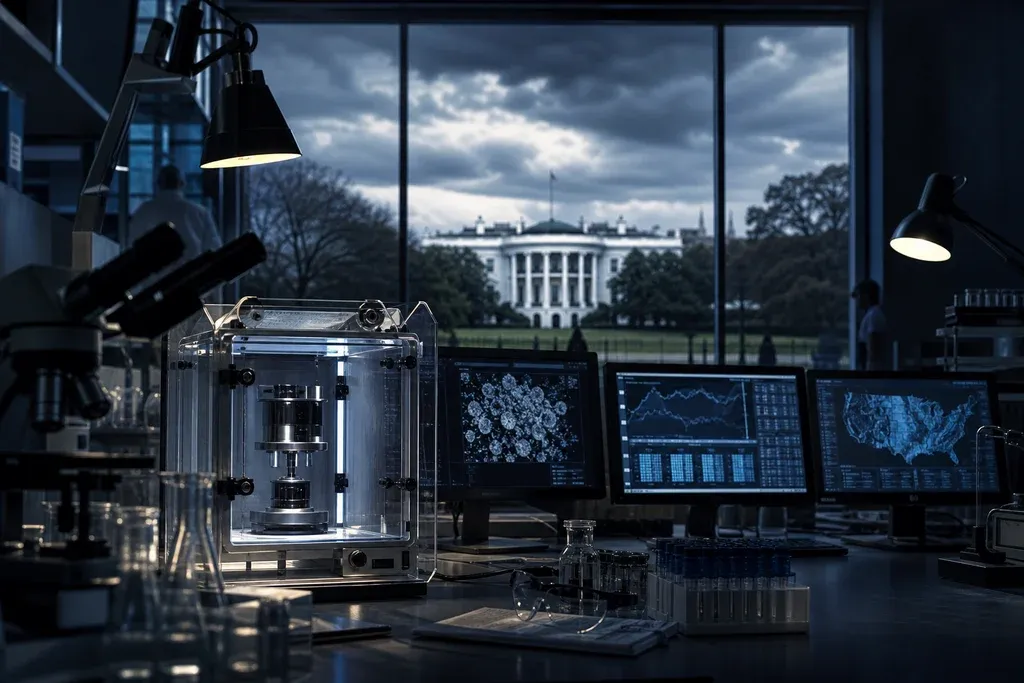
The government’s AI safety watchdog has a new reporting arrangement, no permanent boss and a growing list of questions about who gets to see its work. And now the White House is in the mix.
Officials at the Commerce Department’s Center for Advancing Innovation and Standards for Super Intelligence, known as CAISSI, were recently asked to report informally to a White House office, The Associated Press reported. Two former government officials with knowledge of the discussions spoke to the AP anonymously to avoid repercussions for current staff.
The arrangement is informal—not a reported transfer of the center’s formal authority. But critics fear closer White House involvement could politicize evaluations or leave findings vulnerable to being softened or withheld in deference to the tech industry. The AP did not report that findings had actually been altered because of the arrangement.
No permanent boss, fewer public reports
The center has been dealing with serious turnover. In April 2026, a director was hired and fired within days. His replacement, Chris Fall, resigned after a few months; Commerce confirmed his departure in July. The head of the center’s parent institute has been serving as acting director.
Meanwhile, the center stopped publishing reports on how safely certain AI systems were performing. Congress began asking why in August, according to the AP. The center has an annual allocation of $10 million, the news agency reported.
That is a lot of uncertainty for a government unit tasked with evaluating a technology whose potential risks range from cybersecurity problems to the misuse of dangerous biological knowledge.
Silicon Valley gets a say
The backdrop matters: President Donald Trump and leading AI executives signed a voluntary safety pact on September 29. Trump called for companies to police themselves, while the administration has not explained how it will monitor their implementation, the AP reported.
Companies can also hire outside evaluators, but those firms’ access can be limited by the AI developers they are reviewing. Critics say that makes an independent government role particularly important.
There is another view: Some observers told the AP that closer ties to the White House could give the center more prominence—and potentially more funding. Whether that happens remains to be seen.
What the White House says
The White House did not answer the AP’s specific questions about CAISSI. It pointed instead to Trump’s Super Intelligence Force and a risk report he commissioned from his Council of Advisors on Science and Technology.
For now, the question hanging over the center is not just who its researchers talk to. It is whether the public will get a clear look at what they find—and how independently they can do the finding.
Comments
No comments yet. Be the first to comment!
Leave a Comment