Runway Sets Its Robot Brain Loose, Releasing Praxis-1 Weights and Code
 Written by
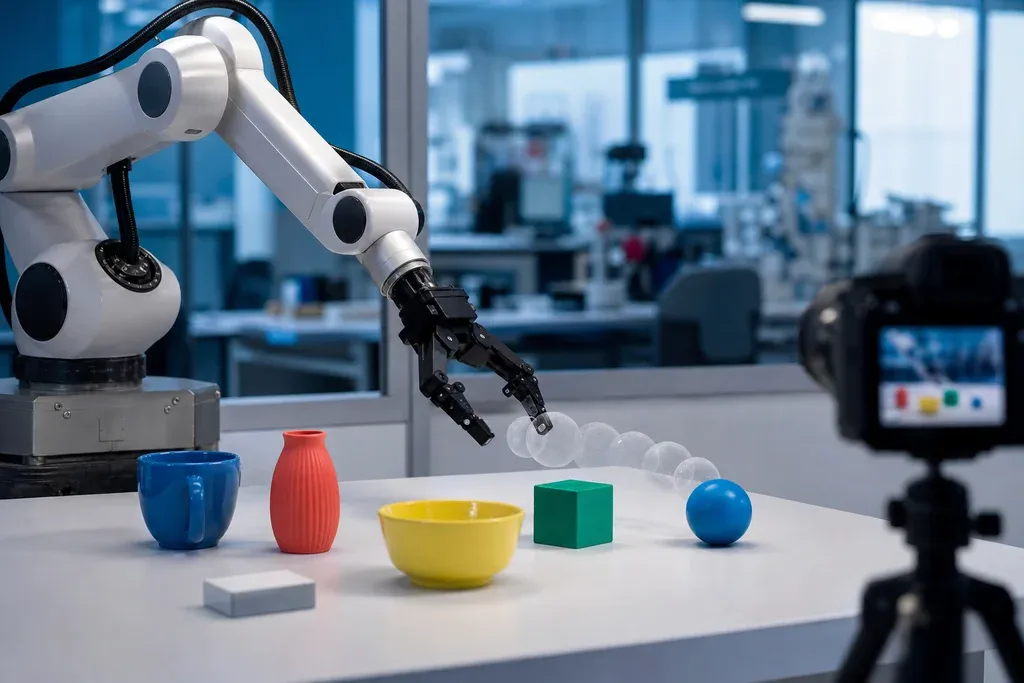
Runway is taking its video AI off the screen and putting it to work in the physical world. The company has released Praxis-1, a model designed to help robots turn what they see into what they do.
The November 11 release includes open model weights and code for running and adapting the system. Runway says both are available under the Apache 2.0 license, including for commercial use. The company first introduced Praxis-1 in September and had been testing it with select robotics partners.
From Video to Robot Moves
Here’s the play: Praxis-1 takes camera images, a text instruction and information about the robot’s position. It predicts how the scene could change, then produces movements for the robot to execute. As fresh camera images come in, the system can adjust its next moves.
Runway calls it a world action model. Its foundation is a 27-billion-parameter video model, which the company says learned from large-scale video before being adapted using human-action footage and robot data. The idea is to bring some knowledge of how objects behave to the robotics job, instead of relying solely on robot recordings.
But don’t mistake that head start for a universal plug-and-play robot brain. The released code and documentation describe versions adapted for a single-arm setup and a two-arm robot. The base model needs further training before it can control a new setup.
The Scores Look Good, With an Asterisk
On NVIDIA’s RoboLab-120, a simulated test of 120 tabletop tasks, Praxis-1 completed 555 of 1,200 attempts, or 46.2%. That puts it ahead of fellow world action model FLUX 3 Action at 42.9%, though four entries using other approaches ranked higher overall.
Runway also reports that, in a test on a physical Franka robot arm operated by Positronic, Praxis-1 succeeded in 88 of 100 attempts across 10 tasks. FLUX 3 Action managed 80 under the same setup, according to Runway’s research report.
Now for that asterisk: The Decoder reported that Runway ran the tests itself and that the results had not been independently verified. NVIDIA’s leaderboard, however, marks the simulation submission as verified; as The Machine Herald noted, that label means organizers independently ran the policy and/or cross-checked its results. It doesn’t specify which, or establish verification of the physical-robot test.
Not Quite Ready to Run the House
Runway acknowledges that Praxis-1 can grab the wrong object when items look alike, struggles with vague instructions and has trouble chaining long sequences from a single prompt. Breaking a job into separate steps works better.
Developers can find the weights on Hugging Face, subject to access conditions. And bringing the standard setup home takes serious hardware: the GitHub quick start calls for a GPU with at least 80 GB of memory.
So yes, the robot has moves. Just don’t expect it to understand every messy assignment—or run on just any laptop.
Comments
No comments yet. Be the first to comment!
Leave a Comment