Kimi K3 Pauses New Subscriptions After Overwhelming AI Demand
 Written by
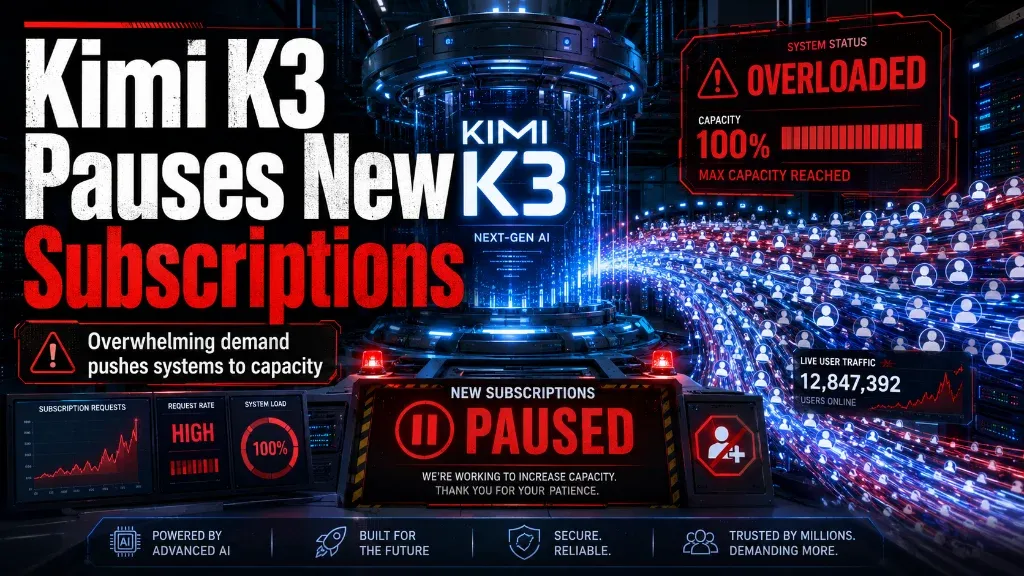
Moonshot AI’s newest digital brain attracted more customers than its computing systems could handle
Kimi K3 is apparently one of the hottest tickets in artificial intelligence—because shortly after launching, the company behind it was forced to tell prospective paying customers: “Not so fast!”
Moonshot AI has temporarily suspended new subscriptions for its powerful Kimi K3 model after a massive wave of demand pushed the company’s computing infrastructure close to capacity.
According to a report from The Associated Press, the Beijing-based AI company stopped accepting new subscriptions after demand for Kimi K3 overwhelmed its available computing resources shortly after launch.
In other words, Kimi K3 didn’t crash and burn—it may have become too popular for its own good.
FROM LAUNCH PARTY TO CAPACITY CRISIS
The trouble reportedly began during the first 48 hours following Kimi K3’s release, when user requests surged far beyond Moonshot AI’s projections. The flood of activity placed extraordinary pressure on the company’s GPU infrastructure, forcing it to prioritize computing capacity for existing subscribers.
Translation: Everybody showed up to the AI party at once—and Moonshot ran out of room at the bar.
The company described the subscription suspension as temporary and said it was working to increase capacity. New subscriptions are expected to reopen gradually as additional computing resources become available.
WHY EVERYONE’S TALKING ABOUT KIMI K3
Kimi K3 is Moonshot AI’s latest flagship system, promoted as a massive, natively multimodal model designed for coding, deep reasoning and professional knowledge work.
According to Moonshot AI’s official website, Kimi K3 contains approximately 2.8 trillion parameters and supports a context window of up to one million tokens.
The model’s arrival has generated major attention as developers and businesses search for powerful alternatives to the expensive, closed AI systems offered by leading American technology companies.
However, the subscription freeze also exposes the less glamorous side of the AI arms race: even the smartest software in the world needs enough chips, electricity and data-center capacity to answer millions of requests.
GOOD PROBLEM—OR WARNING SIGN?
Moonshot can certainly present the situation as evidence of a blockbuster launch. Companies generally don’t pause new sales because nobody wants their product.
Still, customers will be watching closely. A hugely successful debut can quickly turn into frustration if slow responses, strict usage limits or “system busy” messages become routine.
Moonshot now faces the difficult job of expanding capacity without reducing performance for users who already have access.
For the moment, Kimi K3 has accomplished something most technology companies dream about: it generated so much demand that the business temporarily had to stop accepting new paying customers.
That’s one seriously overloaded moonshot.
Comments
No comments yet. Be the first to comment!
Leave a Comment