Brain-Like AI Gets a Reality Check When Scientists Flip the Test
 Written by
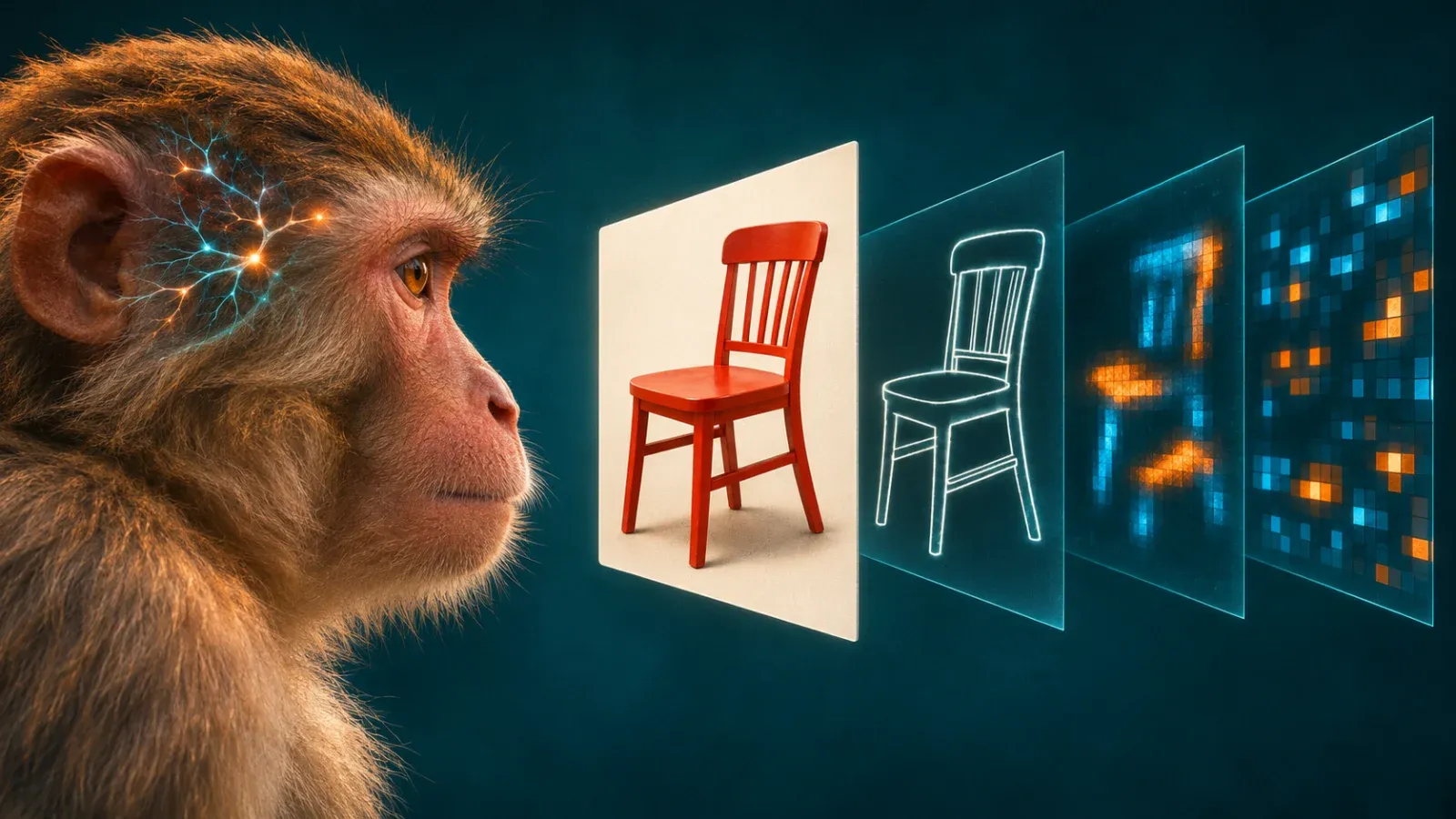
AI may be pretty good at predicting what the brain does when it sees an object. But when scientists asked the brain to return the favor, things got a lot less cozy.
A York University study found that artificial neural networks could predict recorded visual brain activity, while that same activity was less successful at predicting many of the networks’ internal features. Translation: Looking brain-like on one test doesn’t necessarily mean an AI model is working like a brain.
The research, highlighted in a November 22 report, was published March 25 in Nature Machine Intelligence. It focuses on vision models and recordings from macaque brains—not every kind of AI or every corner of the human brain.
The test goes both ways
For years, researchers have compared vision models with the brain by asking how well a model’s internal features predict neurons’ responses to images. Do well on that forward test, and a model can look like a promising stand-in for biological vision.
York postdoctoral researcher Sabine Muzellec and senior author Kohitij Kar decided to flip the question: How well can recorded brain activity predict what’s happening inside the AI? They call the measure “reverse predictivity.”
The difference was striking. The paper reports that models with strong forward predictions—explaining roughly half the variation in neural responses—could still contain units that the recorded brain activity could not predict.
In other words, the models had internal features that did not map neatly onto the measured biological responses. That’s a problem if the goal is not just to predict a brain response, but to use the model as a hypothesis about how visual processing works.
Monkeys, models and a whole lot of pictures
According to York’s account of the study, the image set included 1,320 natural or naturalistic synthetic images featuring 10 kinds of objects, from bears and elephants to cars and chairs. Another 300 images showed the same objects in styles including outlines, drawings and artistic variations.
The neural recordings came from the macaque inferior temporal cortex, a brain region involved in visual object recognition. The team compared those responses with activity inside artificial networks shown the images.
There was also a useful comparison: When the researchers mapped neural activity from one monkey to another, they found a much more symmetrical relationship. The same one-way advantage seen in model-to-brain comparisons didn’t show up in that monkey-to-monkey test.
What the mismatch means—and what it doesn’t
The result doesn’t mean vision models are useless, or prove that every hard-to-predict AI feature is absent everywhere in the brain. It does mean a good forward prediction, by itself, is not proof that a model and the recorded neurons use the same representation.
The researchers also found that model features aligned with the brain were relevant to predicting behavior. Their hope is that identifying those shared features can help scientists build better models of biological vision.
And they didn’t keep the test locked away: The team made its research code and a reverse-pred toolkit available for other researchers. The takeaway? If an AI claims to be brain-like, it might be time to check the resemblance from both sides.
Comments
No comments yet. Be the first to comment!
Leave a Comment